
From Clinical Need to Innovation
Over many years of caring for patients with weeping lower-leg edema and other highly exudative lower-leg conditions, I repeatedly saw the same problems. Existing dressing methods often failed to adequately contain drainage, protect fragile skin, or keep patients comfortable between dressing changes. In many cases, the dressing had essentially "failed" before the next scheduled dressing change. It no longer adequately absorbed drainage, contained fluid, or wicked moisture away from the skin, often causing maceration, increasing the risk of infection and new wounds.
Many nurses have discovered that the best "work around" to improve absorbency and reduce skin maceration, is to cut diaper material - and secure this material to the leg with gauze wraps and ace bandages. The diaper material absorbed considerably more drainage than gauze alone, reducing leakage and better protecting the surrounding skin. However, while this was an improvement to the use of gauze products alone, it was difficult and time consuming to apply to the leg. So, even with this workaround, important problems remained.
It became increasingly clear that patients with persistent lower leg drainage needed something designed specifically for this problem. Over time, I began to wonder if a product could be created that would solve these problems. In early 2018 the journey to create a disposable dressing designed specifically for this clinical problem began. Having no idea how to develop a new product, I turned to an invention education company to learn where to begin.
Over the following years, numerous prototypes were developed, evaluated, and redesigned. One of the most important turning points in the project was hiring a consultant with decades of experience in wound product research and development and nonwoven medical materials. Many prototypes were developed, each version addressing specific shortcomings identified during clinical observation, gradually leading to the final patented design shown today.
2018
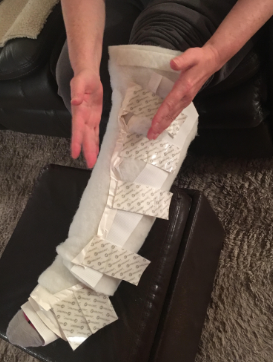
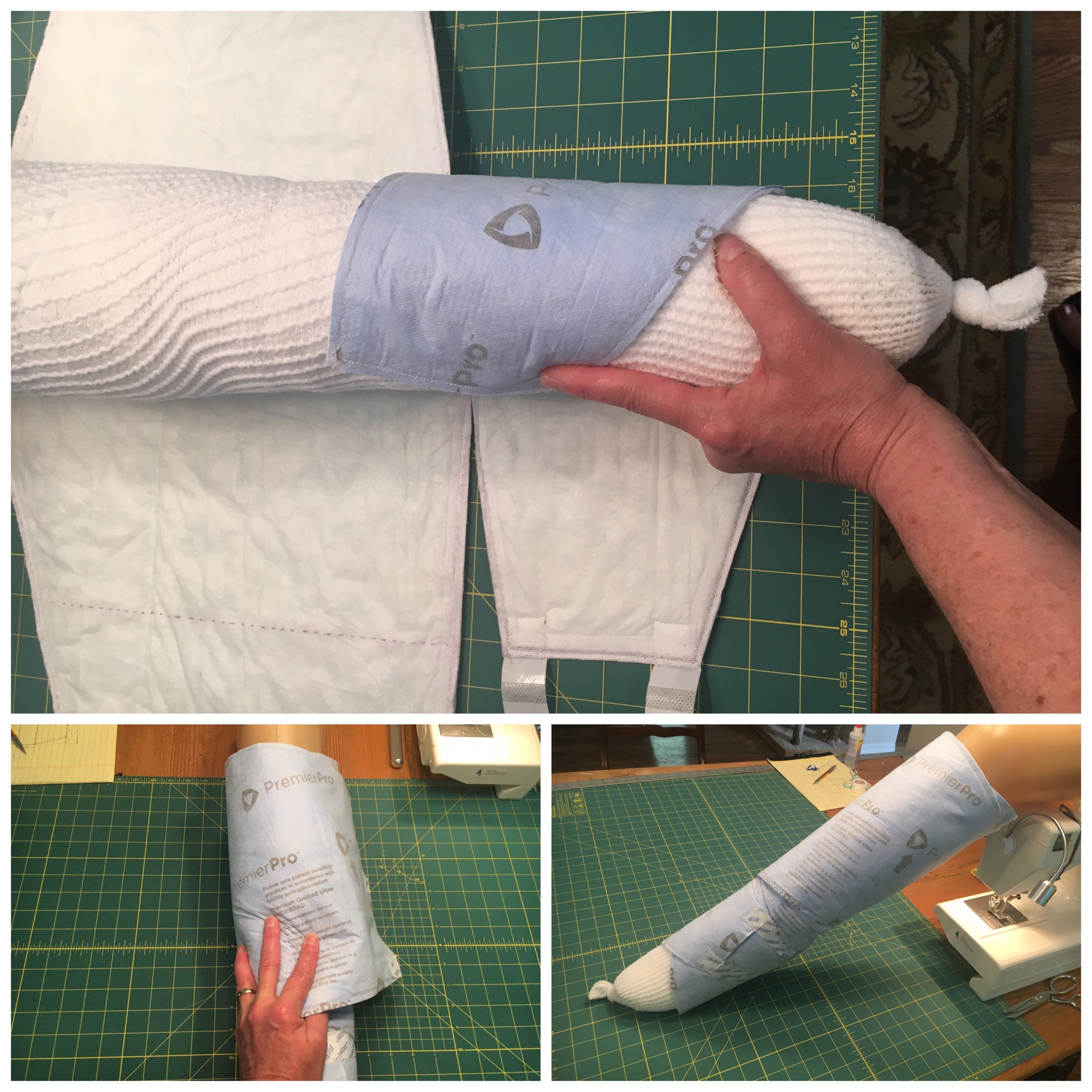
2019 - 2021
Improved anatomical coverage and absorbent capacity. Early concepts explored numerous shapes, absorbent materials, layer configurations, and attachment methods. Each prototype was designed to address specific clinical challenges observed during patient care, including early saturation and leakage, skin maceration, inability to adjust the wrap in response to fluid fluctuations, and application challenges that limited caregiver independence and frequently required additional nursing visits for management. In 2019, an experienced consultant specializing in nonwoven medical materials and manufacturing was retained to guide product development and transition toward scalable manufacturing.
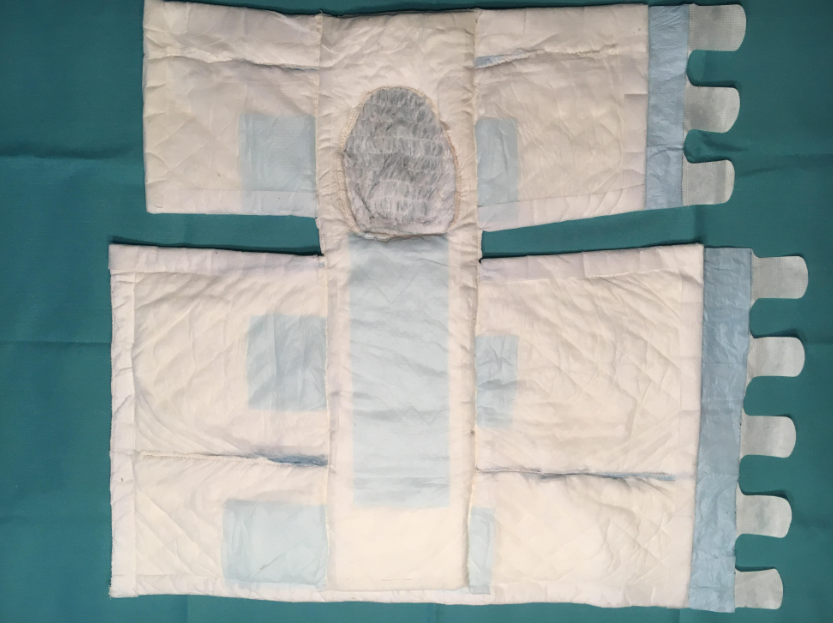
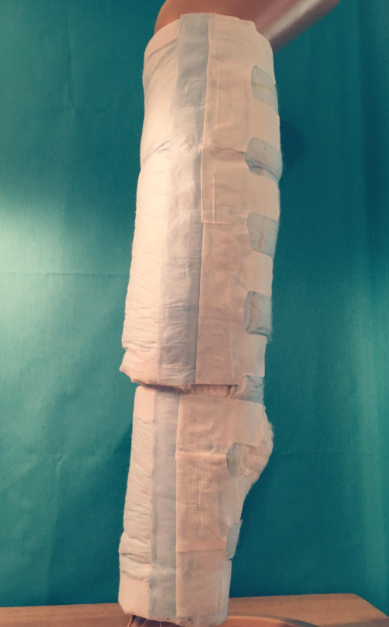
2022 - 2023
Introduction of stretch panels and improved adjustability. Development continued despite manufacturing delays created by the COVID-19 pandemic. During this period, the wrap underwent significant refinement to improve anatomical fit, allowing consistent skin contact between the semi-permeable inner-layer and the skin surface - an essential feature for effective fluid wicking and containment. Stretch panels with integrated hook-and-loop fastening replaced earlier attachment methods, resulting in a more secure, adjustable fit that accommodates day-to-day fluid fluctuations in lower-leg edema. Additionally, for the first time, a clinician can assess the skin without completely replacing a dressing by simply opening and closing the wrap, which is otherwise clean, dry, and intact.
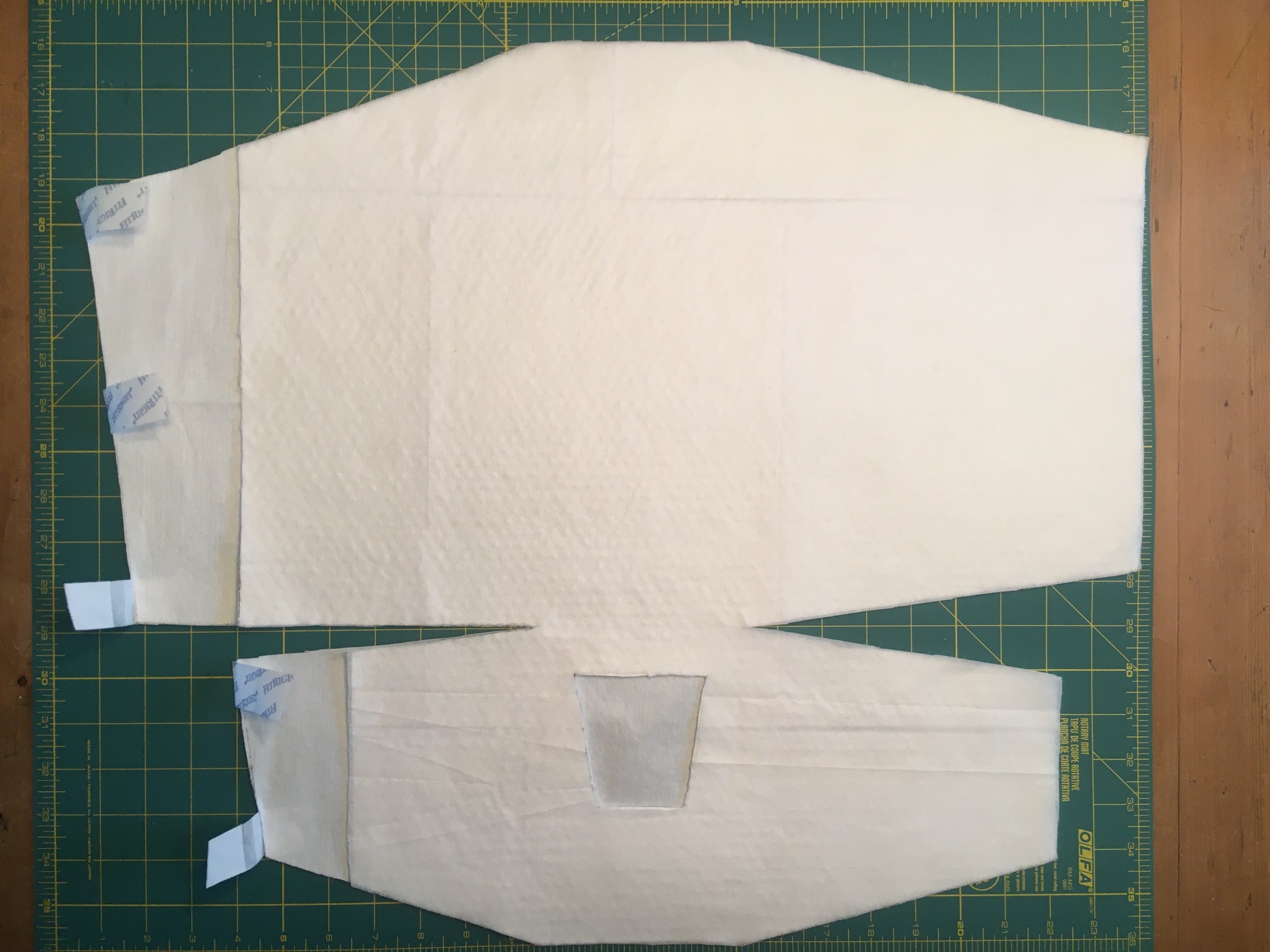
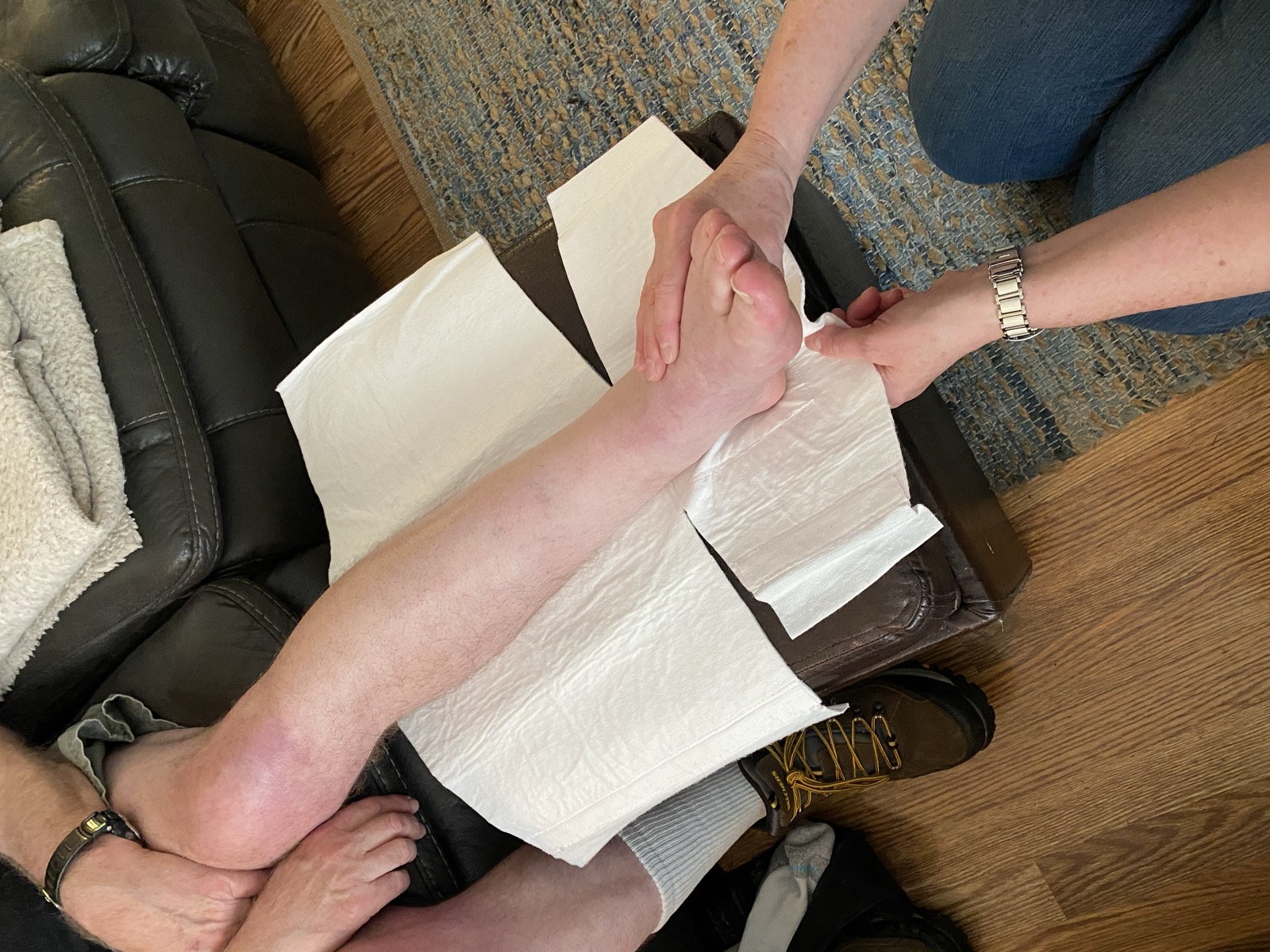
2024 - 2025
Development milestones during this period included the issuance of both utility and design patents, protecting the functional innovations and unique configuration of the Leg Wrap.
Utility Patent # 12,053,356 issued August 2024
Design Patent # D1068085 issued March 2025
2025 - present
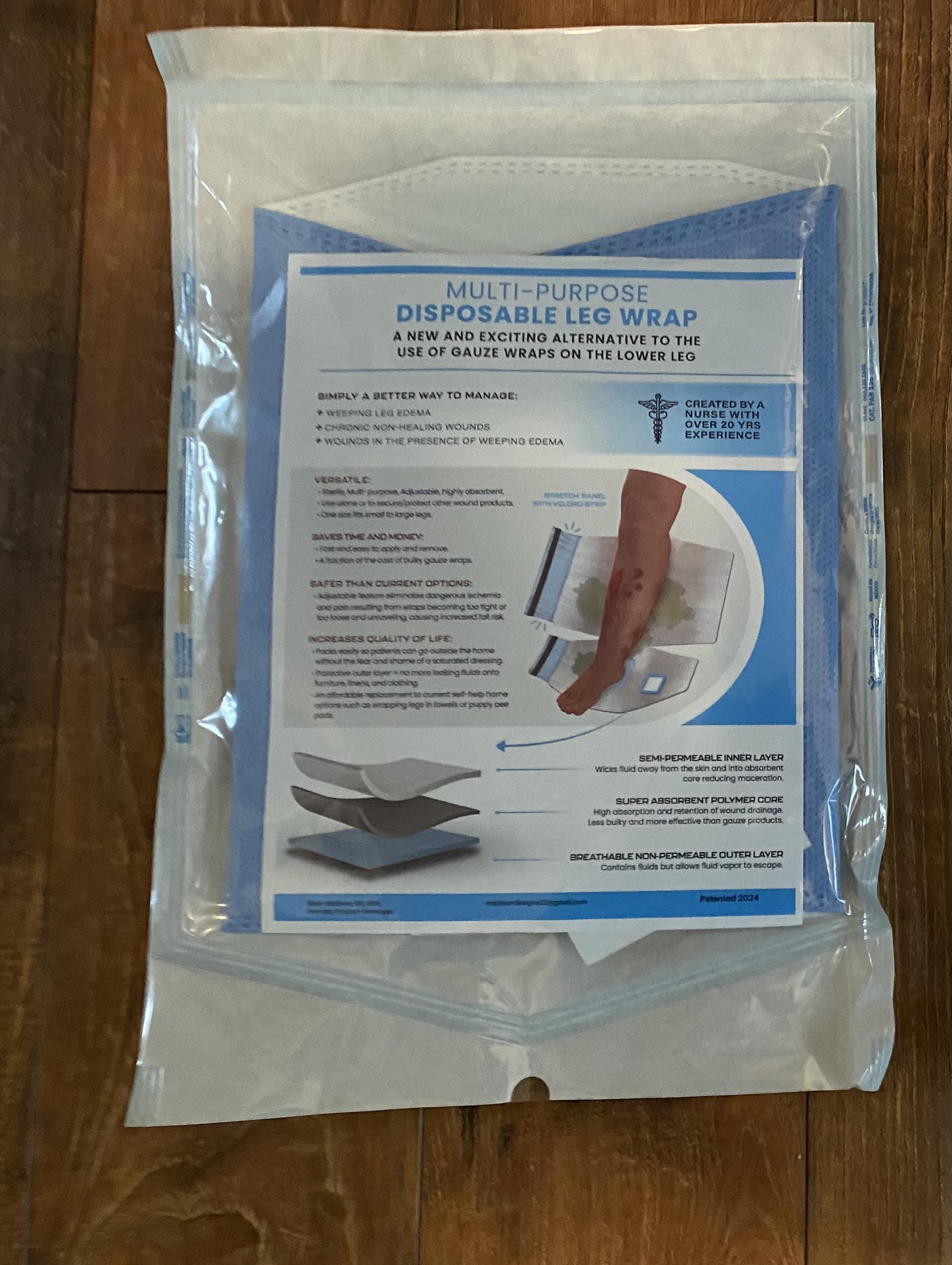
A product is born! The first #300 individually packaged wraps were manufactured by an FDA-registered manufacturer, sterilized, and tested for safety for use in a future pilot study.
Commercial-ready configuration with sealed edges. A new FDA-registered manufacturer was engaged to transition the Leg Wrap from a prototype to commercial -ready production. Final manufacturing incorporated sealed peripheral edges that completely contain the superabsorbent polymer (SAP) core, preventing gel migration while producing a finished product consistent with modern wound-care manufacturing standards.
To protect proprietary manufacturing information, additional details regarding the commercial-ready configuration are available within the secure Data Room after execution of the online Non-Disclosure Agreement (NDA)
For organizations interested in exploring licensing opportunities
A secure Data Room link is available following execution of a Non-Disclosure Agreement (NDA). It contains additional technical information, commercial strategy, manufacturing overview, product vision, and other confidential material intended to support informed licensing discussions.
- Wrap in action video
- How it works - Proprietary design info
- Leg wrap vision
- Market assessment